


How to Build a 7-Figure
Online Course in 2026
I scaled past $600K/month selling courses — working 2-3 hours a day.
Here's the exact process, step by step.
By Sander Stage | 12 min read | March 2026
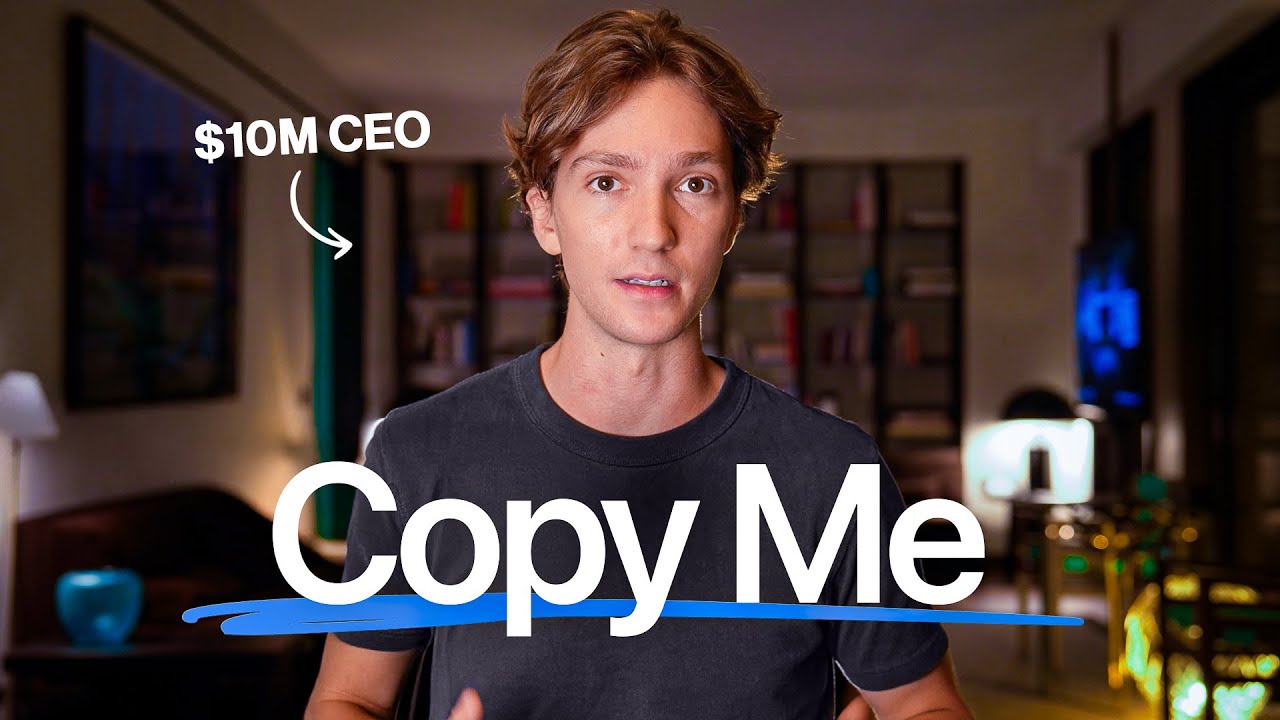
Most people believe you need a massive audience, a full sales team, and years of experience to make real money selling online courses. That belief is wrong — and it's costing you time.
Last year, I scaled my online course business past $600,000 in monthly profit, working just two to three hours per day, without complex backend systems or a huge following. In this post, I'm breaking down the exact six steps that made it possible — and how you can replicate them regardless of what you teach.
Whether your expertise is in fitness, photography, finance, music, consulting, or even something as niche as wine tasting, this blueprint works. There are million-dollar courses being sold on virtually every topic you can imagine. And the best part? You don't need to be the world's foremost expert to get started.
Whether you're aiming to create & launch your first online course from scratch, or to scale an existing online course to $100K/month and far beyond - we have courses, services & systems to accommodate your needs!
How to Build a 7‑Figure Online Course in 2026
By following the same process I've used to scale beyond $600,000/month selling courses — working 2-3 hours a day.
Most people believe you need a massive audience, a full sales team, and years of experience to make real money selling online courses. That belief is wrong — and it's costing you time.
Last year, I scaled my online course business past $600,000 in monthly profit, working just two to three hours per day, without complex backend systems or a huge following. In this post, I'm breaking down the exact six steps that made it possible — and how you can replicate them regardless of what you teach.
Whether your expertise is in fitness, photography, finance, music, consulting, or even something as niche as wine tasting, this blueprint works. There are million-dollar courses being sold on virtually every topic you can imagine.
Step 1Find a Specific Group of People You Can Serve
Every profitable online course starts with one thing: a clearly defined audience.
It doesn't matter what your skill or profession is. What matters is having clarity on who you're helping and what transformation you're offering. The moment you try to teach everyone, you end up reaching no one.
Here's a simple framework. Let's say you're a tennis coach. You have two viable routes:
The Skill Route — Teach other tennis players how to improve their game. Think forehand technique, serve mechanics, match strategy.
The Business Route — Teach other tennis coaches how to get more clients, raise their prices, and grow their income.
One profession. Two completely different audiences. Both can lead to seven-figure course businesses.
You Don't Need to Be the Best — Just a Few Steps Ahead
A personal trainer once told me a story that illustrates this perfectly. He was the most physically impressive trainer at his gym. But a slightly overweight, older trainer was consistently getting more clients. Why? Because that trainer was relatable. Prospective clients felt like he had been through the exact transformation they wanted.
The best online teachers are approachable, not untouchable. You just need to be a few steps ahead of the people you want to serve.
When I started teaching online over six years ago, I had just 800 Instagram followers. My results weren't glamorous. But I was sharing my journey honestly — my small wins, my discoveries, my process. People found it interesting and started asking if I could help them do the same.
Step 2Pre-Sell Your Course, Gather Feedback, Then Optimize
This is where most first-time course creators make a critical mistake: they spend months building a full course before validating that anyone actually wants it.
Don't build first. Sell first.
- Pre-sell a limited number of spots at an early-bird price
- Gather feedback from early buyers on your draft outline
- Optimize the curriculum based on what they actually need
- Then produce the course
When I created my first course six years ago, I pre-sold 10 spots at $200 each. That $2,000 confirmed demand. But instead of sharing my draft outline with those students, I disappeared for two months and produced a 40-lesson curriculum. When they went through it, gaps became obvious — things I would have caught instantly with a couple of conversations.
Pre-selling isn't just about making money early. It's about building the right course.
Step 3Build a Simple, Lean Version One of Your Course
Now it's time to create your course. But here's the key: version one does not need to be a masterpiece.
It doesn't need to be long. It doesn't need Hollywood-level production. People don't pay for entertainment value — they pay for the information and transformation your course delivers.
Your version one should cover one specific problem for one specific type of person with one specific solution. When you narrow the focus, 10 well-structured lessons are more than enough. That's something you can produce in under a week.
Remember: you can always add more later. Version one is about getting something valuable into the market.
The Course Creator Launchpad walks you through structuring, creating, and launching your first course — step by step, live on camera.
Full Access For $39 (90% Off)Lifetime Access · Money Back GuaranteeBuild a Simple Sales Funnel
With your course complete, you need somewhere to send traffic. This is where your sales funnel comes in — and I cannot stress this enough: the simpler, the better.
I've run dozens of split tests, and it's always the simple, borderline ugly funnels that outperform the polished ones.
Your funnel only needs four elements:
- A strong headline — Your core value proposition
- A VSSL (Video Sales Letter) — A 5-to-10 minute video presenting the offer
- An offer description — What's included, who it's for
- A pricing section — Simple, clear, no complicated tiers
Excluding the VSSL recording time, you can get a sales funnel live within two hours. Once it's up, you have an automated system generating sales 24/7.
Step 5Go All-In on Organic Traffic (Especially YouTube)
Before you've reached $10,000/month in course revenue, forget about paid ads. Focus exclusively on organic traffic.
The single most powerful platform for selling online courses organically? YouTube.
Your Organic Traffic Playbook
Set up your profiles. Make sure every social bio states your value proposition and links to your funnel.
Post on YouTube at least once a week. Don't overthink production quality. Record and hit publish. Your first videos will be bad — mine were terrible. But each one gets easier.
Don't obsess over view counts. Even a couple hundred views per video is enough to start generating sales from people you've never met.
Small Channels Often Outperform Large Ones
Followers do not equal buyers. Channels with a million subscribers often generate almost no course sales, while channels with under 10,000 subscribers produce six figures per month.
The difference? Hyper-focused audiences built by consistently delivering value in a specific niche.
Step 6Scale As Far As You Want
Once everything is working — course delivering results, funnel converting, YouTube bringing traffic — the final step is scaling.
Continue posting weekly. When you reach $10K–$20K/month, consider adding paid ads on top of your organic foundation.
Some creators settle at $50K/month. Others push to $500K+ and beyond. You control the pace.
The One Honest Limitation
The one significant limitation: you are the product. This isn't a software company you can exit. If you stop creating and marketing, the business will decline.
But the tradeoff: this model generates extraordinary cash flow and freedom. Over five years, I've made more than $10 million in profit from online courses. It's a cash flow machine — and for most people, that's more than enough.
Frequently Asked Questions
No. You just need to be a few steps ahead of the people you want to teach. Relatable instructors often outsell top experts because students feel they understand their struggles.
Around 10 focused lessons. A lean course is faster to produce, easier to complete, and can always be expanded later.
Not at all. A screen recording tool and a decent microphone are enough. Students care about the information, not the production value.
Less than you think. Even a few hundred YouTube views per video can generate daily sales with a well-structured funnel.
YouTube. It combines discovery, trust-building, and conversion better than any other platform.
Virtually yes. There are seven-figure courses on jazz music, wine, motherhood, fishing, photography, and business consulting.
Start with a price reflecting the transformation you deliver. Pre-sell at an early-bird discount to validate demand, then raise pricing as you collect testimonials.
Ready to Build Your Course?
Everything I know about creating, launching, and scaling online courses — step by step, live on camera.
One-time payment (save 90%)
- 9 in-depth course chapters.
- Private Members' Community.
- Templates & systems for everything.
- No previous experience required.
My Social Medias


Support & Login
Legal Pages

© 2025 Course Creator Co.
All Rights Reserved